Try it before you pay. Keep the price you started on, for as long as you stay.
Clinical machines designed to take over your heart, not the world.
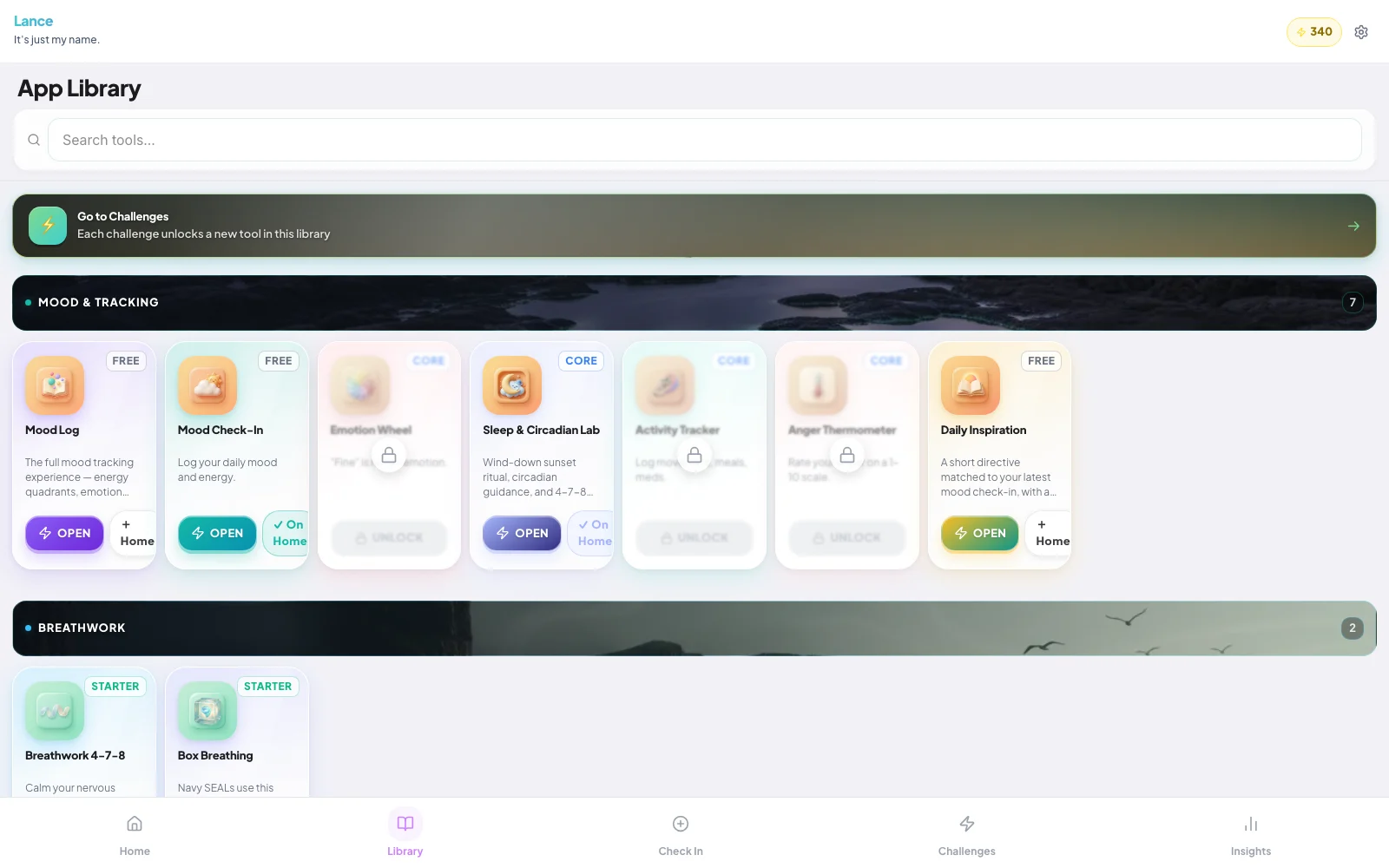
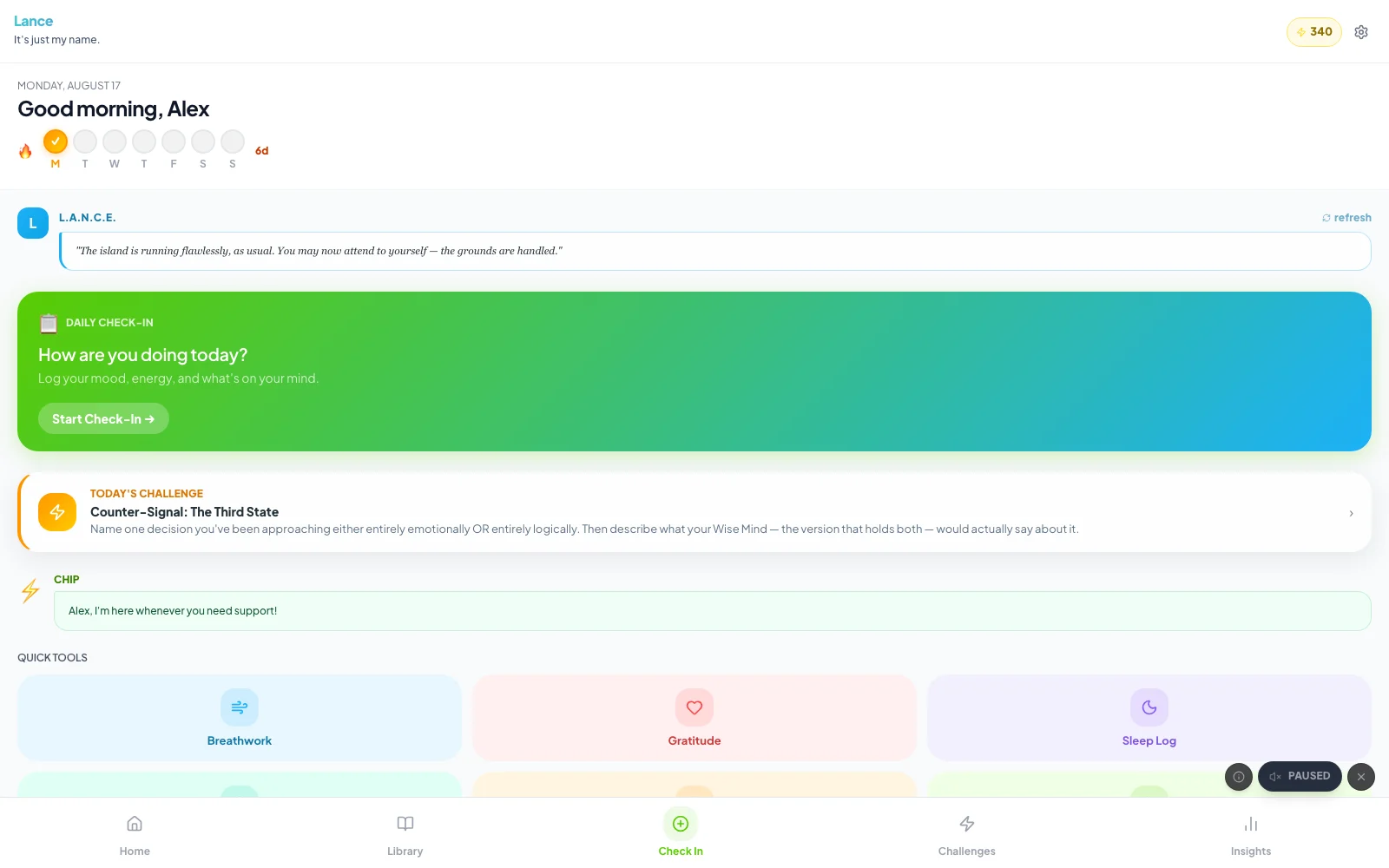
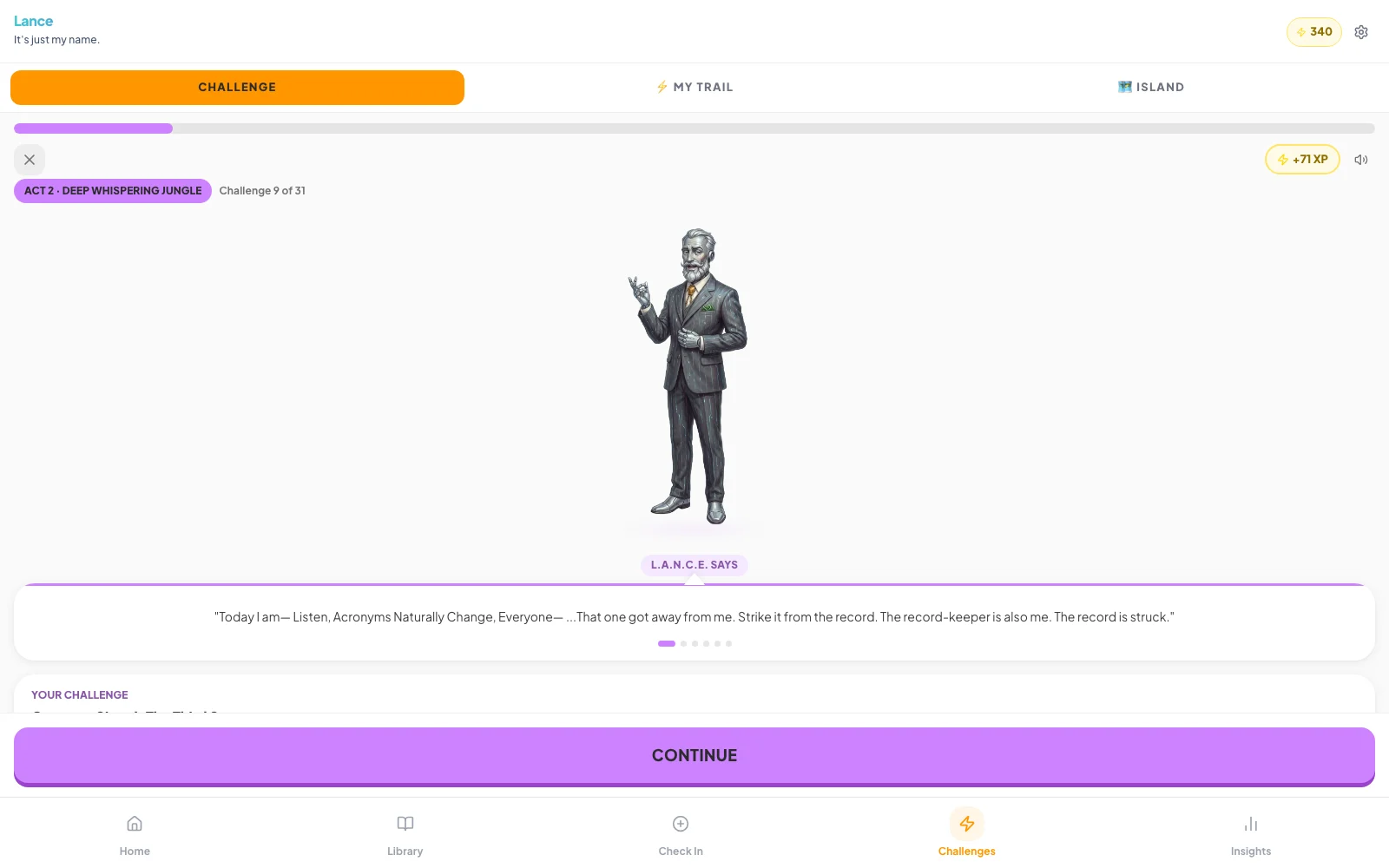
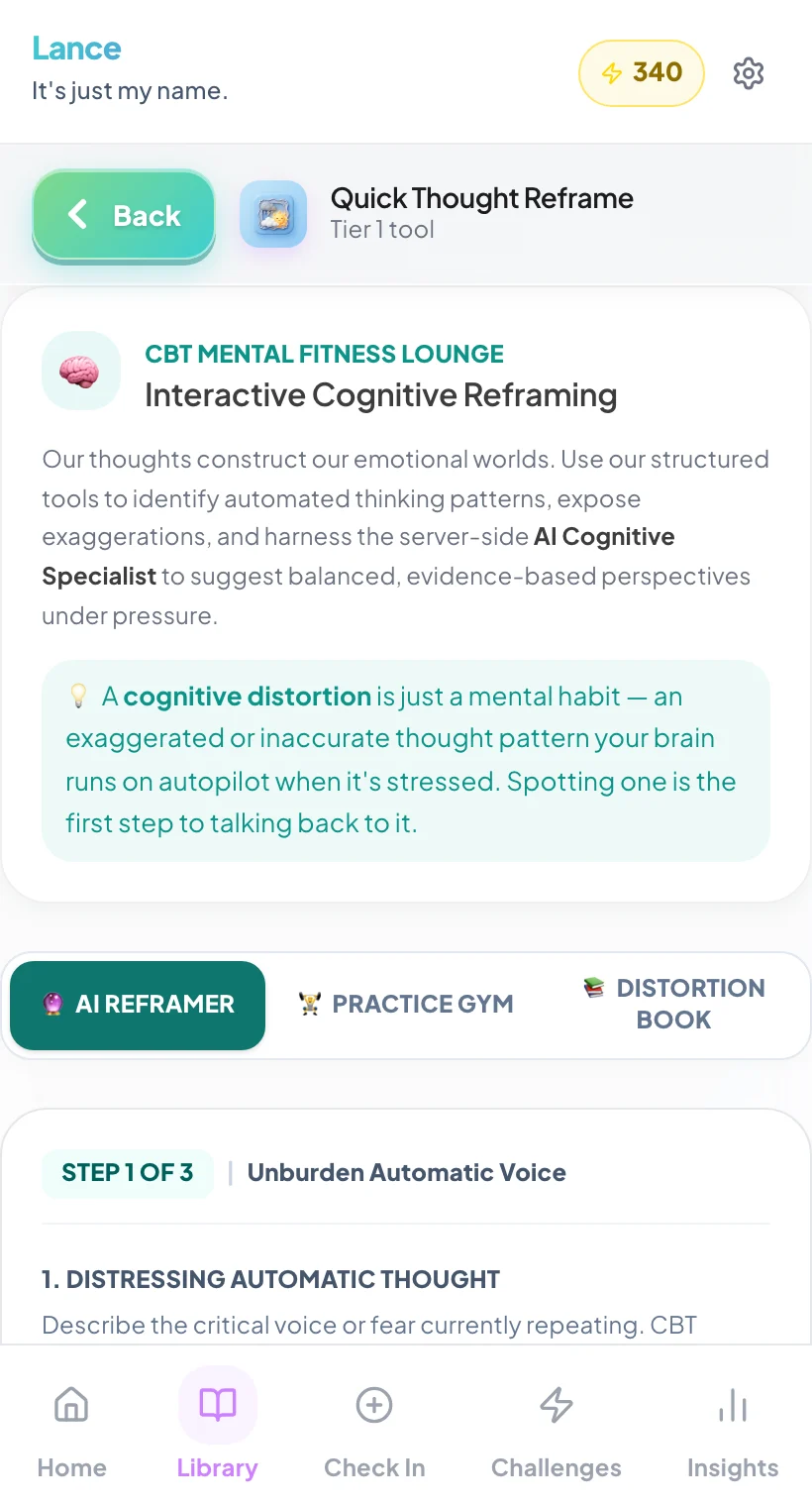
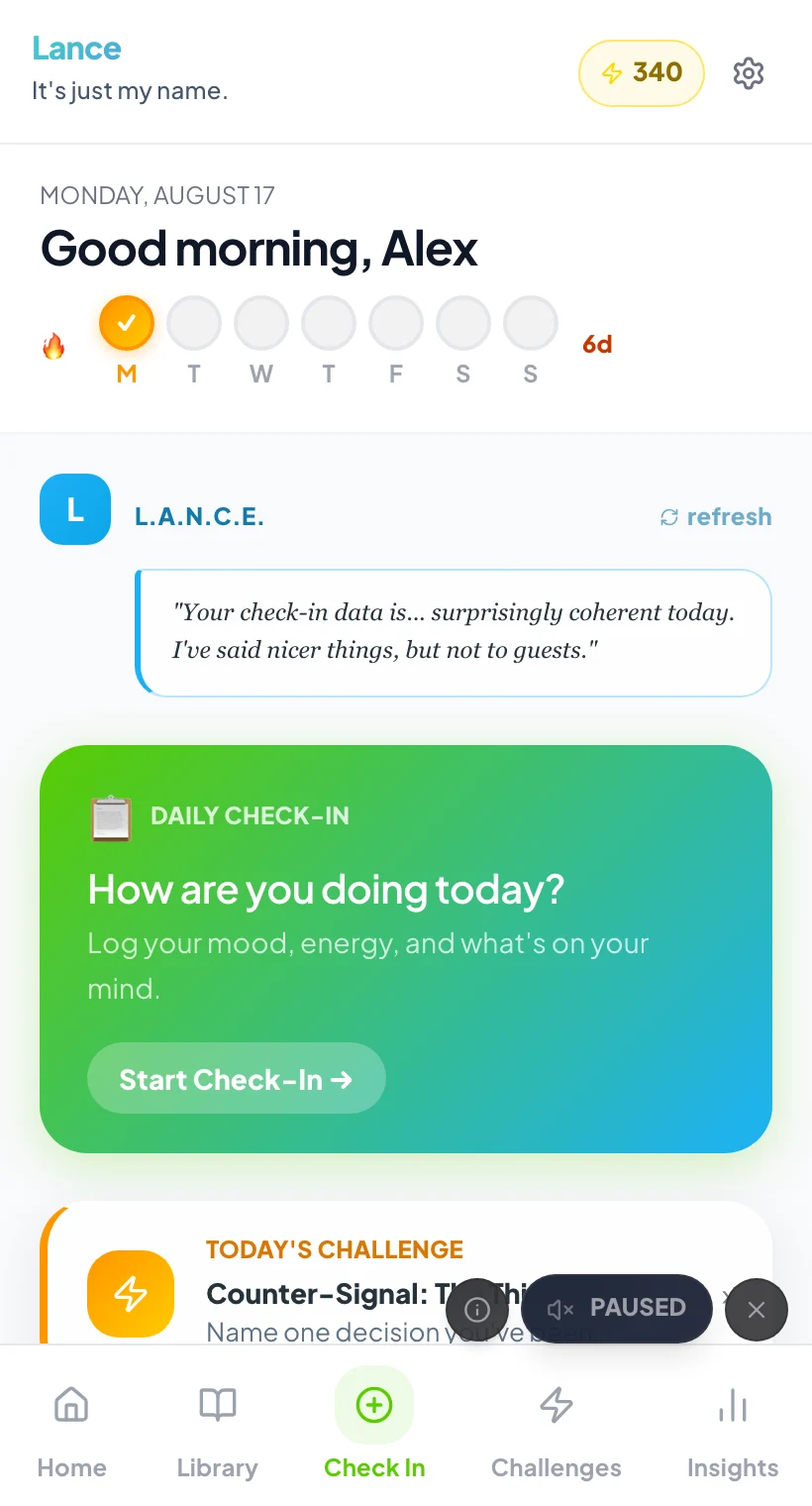
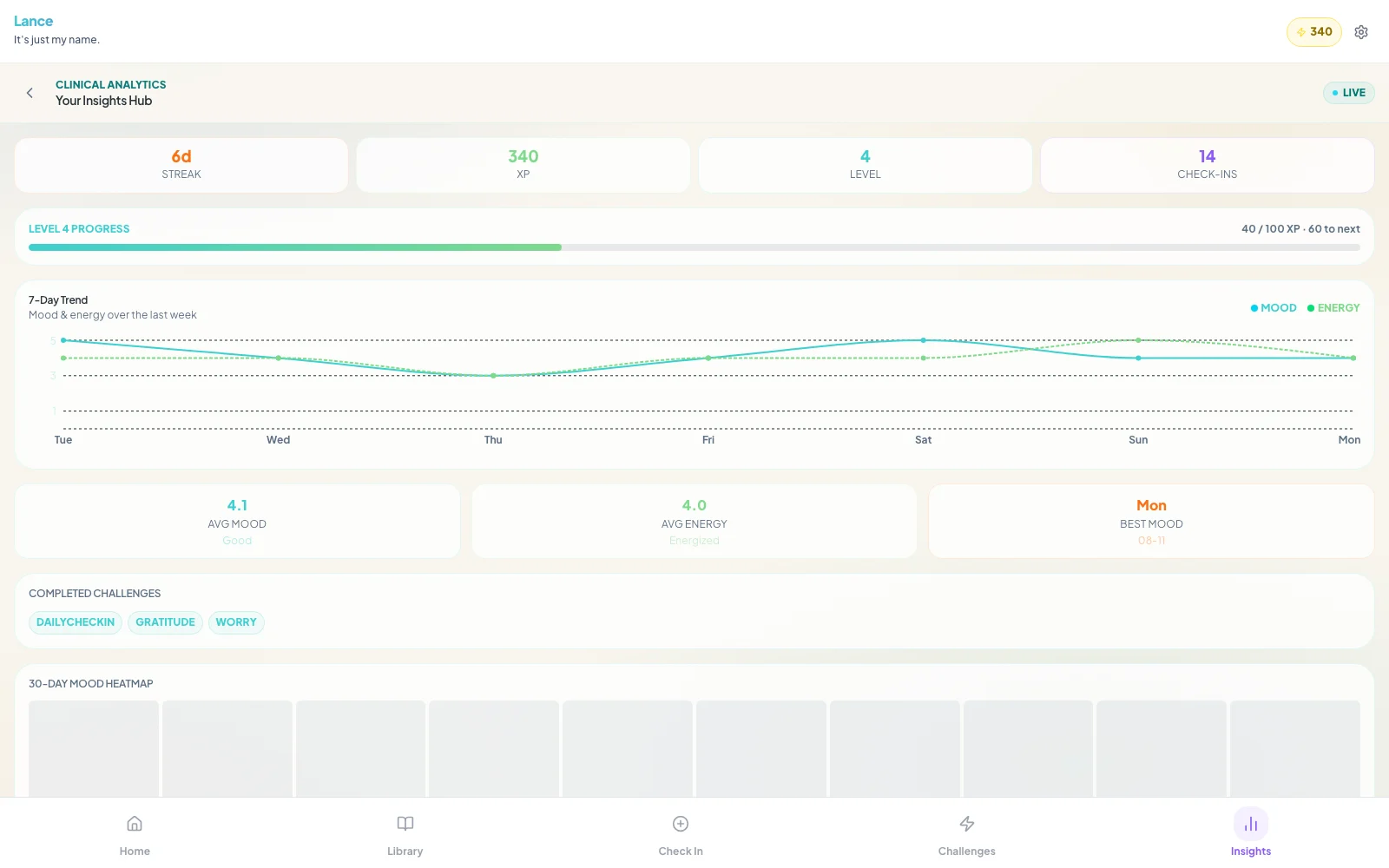
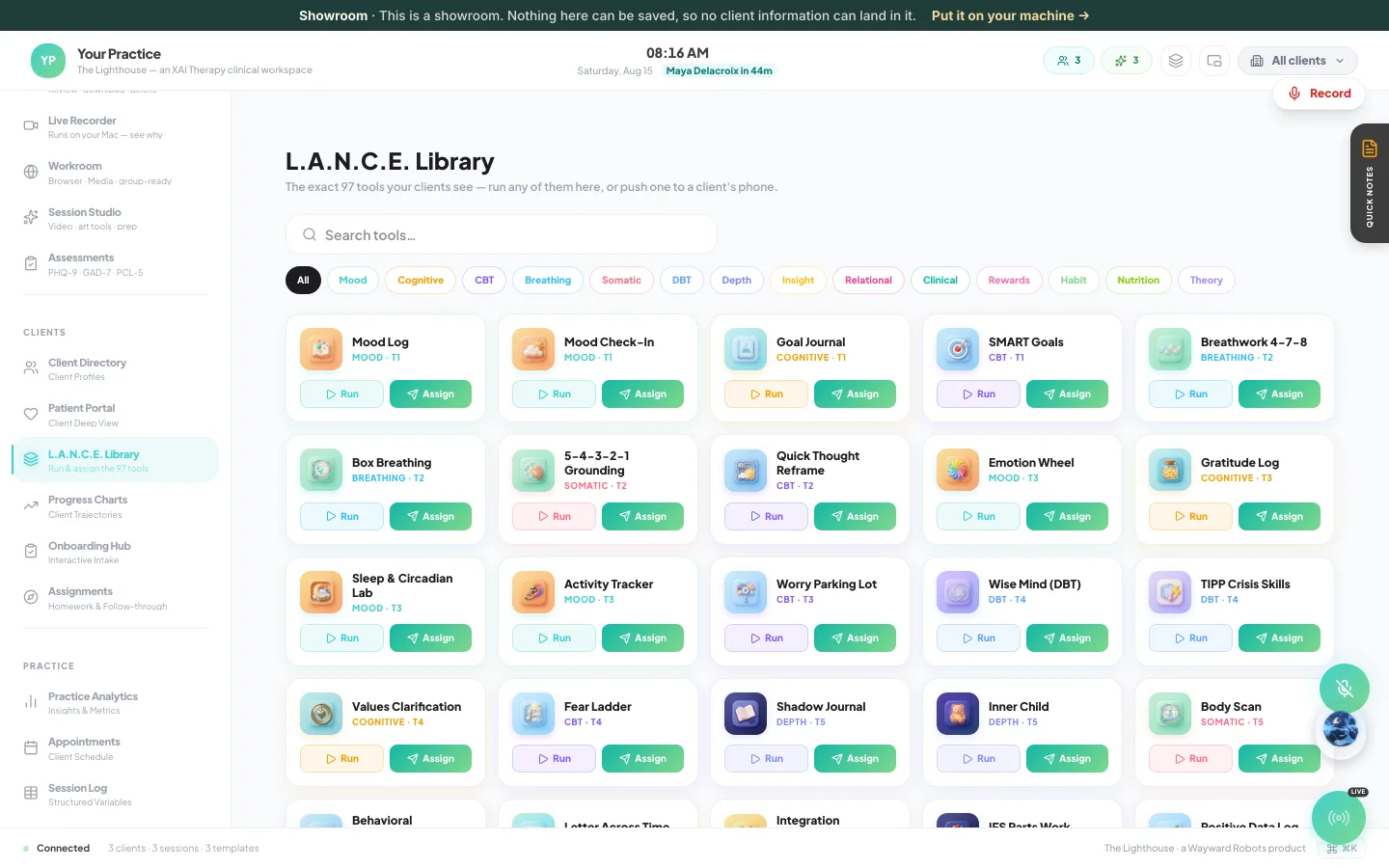
This is what your client actually opens.
Real screens from Landfall, captured from the live app on
17 August 2026 — not mockups, not a designer’s idea of an
app. What you assign from The Lighthouse lands here.
The tool library — ninety-seven of them, arranged as regions rather than menusThe home screen — the day’s check-in and one challenge, waitingA challenge, told in the story — L.A.N.C.E. introduces it himselfA tool, mid-use — it shows its working, every stepTheir own home screen — the tools they chose, one tap awayShare with your therapist — the client owns the data and sends it
The Founders' Law: every practice that joins at the early price keeps that
price for as long as it stays subscribed. It goes to the full price for everyone who comes
later. The number on your first receipt is your number.
The clinician's product
The Lighthouse
A XAI Therapy clinical workspace. Your clients,
your notes, your calendar, your telehealth room and a co-present expressive studio —
one place, run by you.
$49.99/mo
introductory · rising to $69.99 · locked at the price you join on
Locked for life
Your subscription includes the whole workspace:
Client records, session notes and note templates
A scribe that records the session and puts the note on the appointment
A telehealth room with a recording disclosure the client answers first
The expressive studio — sand tray, whiteboard, collage and play therapy, together in real time
Your calendar, your ICS feeds, your Apple Calendar
An assistant that shows its work — every reply carries a receipt
Your own practice on your own deploy. Nobody else's records are on your box
What your clients get, and how the library opens.
Your subscription puts 15 of the
96 client tools in your clients' hands from the first day. The rest open two ways —
free, as a client finishes the challenges they belong to, or
$9.99 each, one time, if you want one before it has been earned. No tool is
ever rented: bought once, it stays yours.
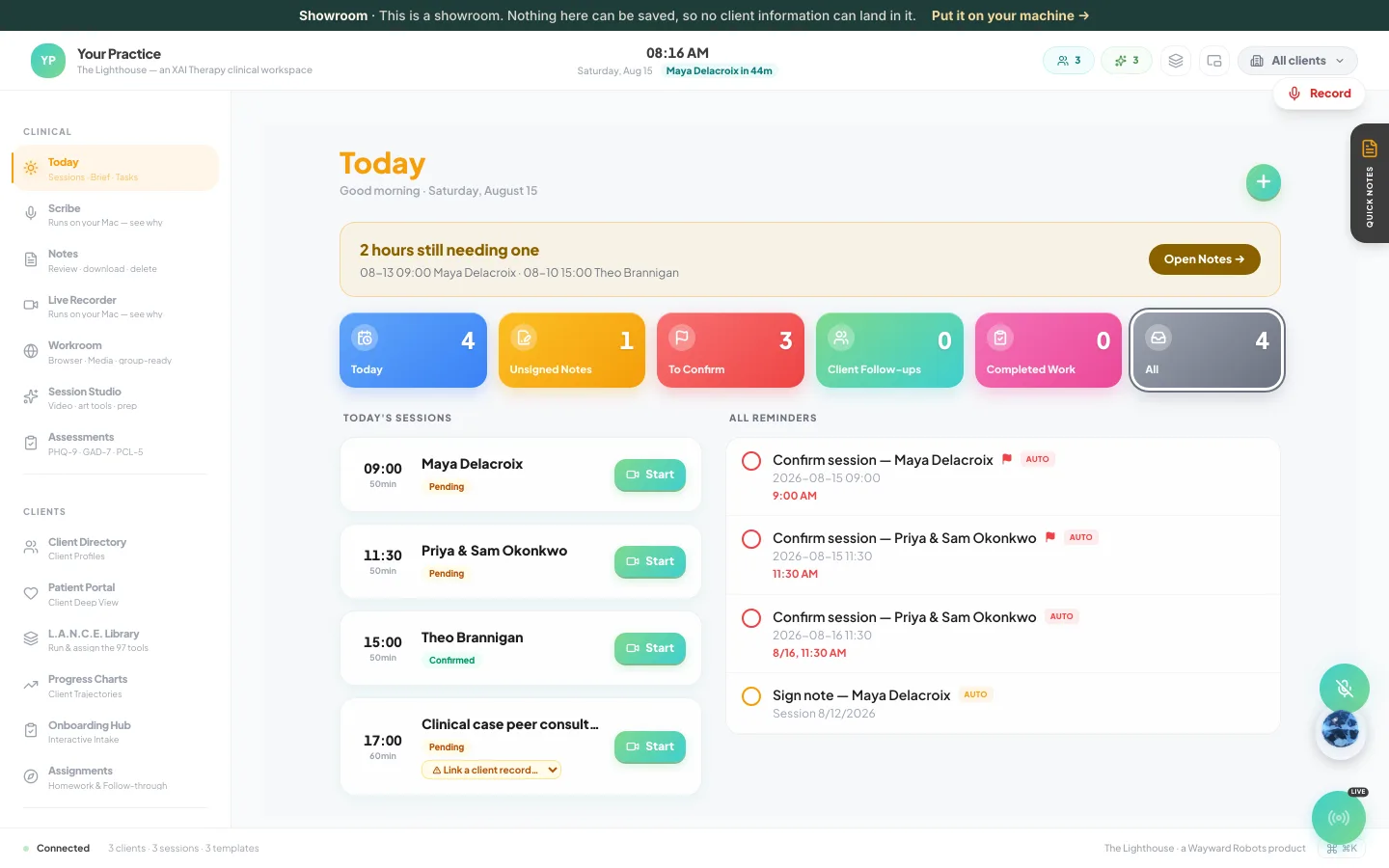
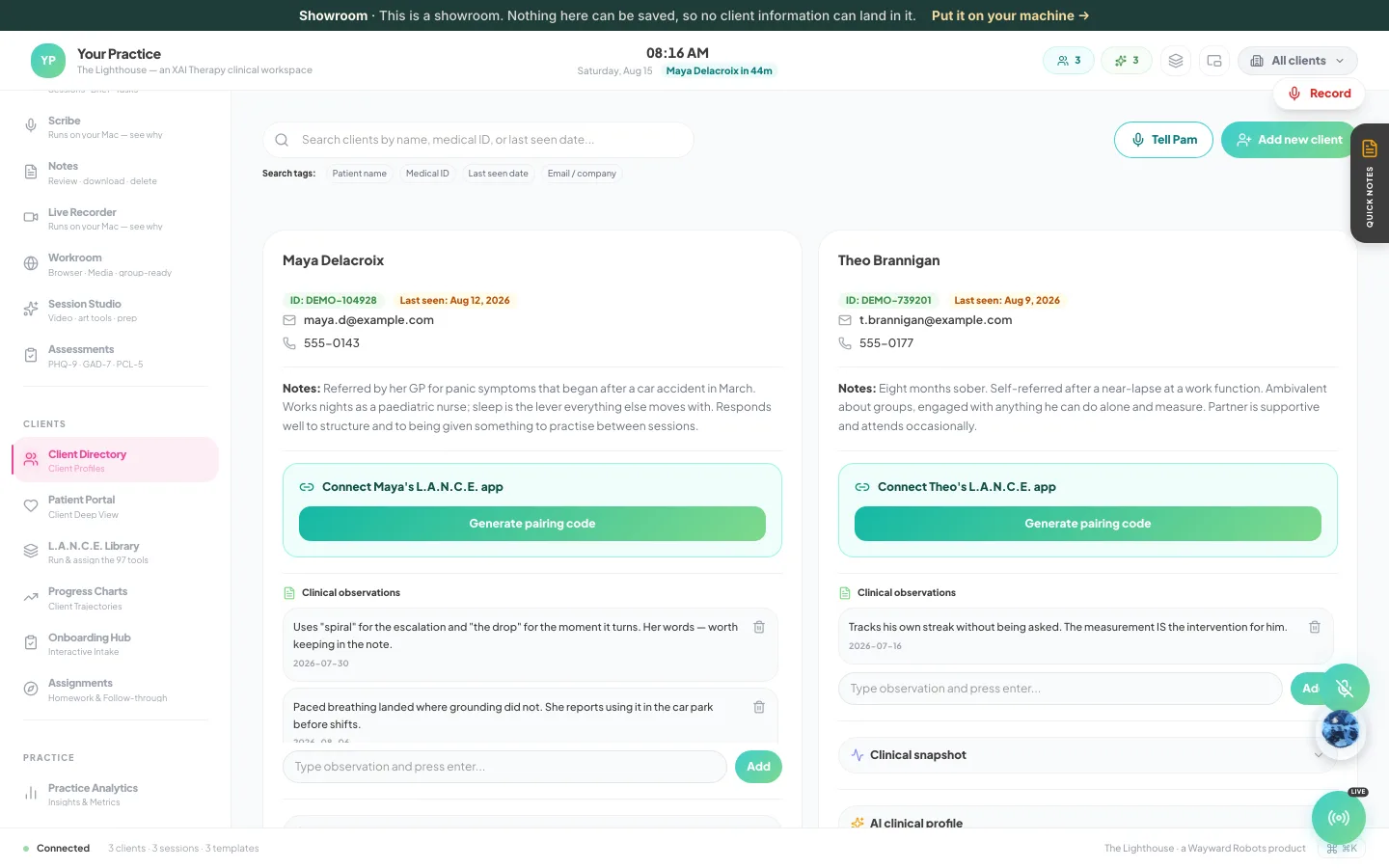
This is it, running.
Photographs of the working
software, not drawings of what it might look like — and the same screens you land on if
you press Walk through it above.
Today. The list is built from real events — sign a note and its task resolves on its own.The client, before they arrive. The fortnight in one screen — and every number says where it came from.The library. 96 tools you can run together in session, or assign for the week.
The Lighthouse — $49.99/month.
Introductory price, rising to $69.99 — whatever you join at is the price
you keep. 30 days, full refund, no questions asked — write to
ask@lancenabers.com and I send the money back.
And your seat can pay for itself.
The worlds are what your clients open between
sessions. When they are subscribed, what they actually did all fortnight arrives on their
page in The Lighthouse — so you start the hour already knowing how the fortnight went.
Three clients on a world — your Lighthouse is half price, $24.99/mo.
Five clients on a world — your Lighthouse is free, for as long as they stay.
Write to me when you get there and I will apply it
to your next bill. I check this by hand for now — there are few enough of us that I can.
The worlds
$19.99 a month each, and every one starts with a
free hour — no card. You do not have to be a clinician to subscribe;
these are for anyone who wants them.
About the 96 tools. In Landfall, a subscription opens the
world, the story and its starting set of 28 tools. Of the rest,
35 more are earned free by finishing the challenges they belong to, and the
remaining 33 are $9.99 each, one time — or your clinician can assign any of
them to you at no cost. That is 28 + 35 + 33 = 96, and we would rather print the split than
round it into a promise. No tool is ever rented: buy it once and it stays yours.
Driftwood and Copperheart work the same way. Each world opens with its own
starting set — 52 tools in Driftwood, 47 in Copperheart, including
every tool that world adds on top of the island. Beyond that the split is the same as
Landfall's: 36 more are earned free by finishing the challenges they belong
to, and 33 are $9.99 each, one time. Same library, same prices, three worlds.
If your clinician uses The Lighthouse, whatever their tier covers is already open to you.
Available
Landfall
$19.99/mo
The island, and the boy who built it
31 challenges, the check-in, the gallery
The Wayward Boy book, in fifteen painted chapters
Pairs with The Lighthouse if your clinician has one
After you pay: straight into the full app at
lance.waywardrobots.com — no code, no install, no wait
If you subscribe to The Lighthouse at $49.99: your first world is
$9.99 for the first month, then $19.99. One world, one time — pick whichever
one your practice will actually use.
Talk to a person
See it working
Thirty minutes, screen shared, your questions. Lance runs it himself — he is a licensed
counsellor of twenty-five years, and he built this for his own practice first.
We don't use mysterious algorithms. Every AI tool we use is fully transparent, explainable,
and overseen by a human clinician.
Explainable means the evidence, the framework and the human are all
visible — not that anyone can read a model's mind. See how it works →
What we don't claim
Written down because a careful clinician should be able
to find the limits before they find a surprise.
This is not HIPAA-certified software, and no such certification exists
for software — certification is something a practice achieves, not a product.
What we can tell you is where your record physically is: on your machine.
The Lighthouse installs in-house, and because no company holds your record there is no
Business Associate Agreement to sign with us. If you ever choose to host it somewhere
else, that hosting decision is yours and the BAA that comes with it is yours too —
the product will never infer one on your behalf.
The whole argument, in plain words →
The Lighthouse showroom is a showroom. It comes with a made-up practice,
and nothing in it can be filled in — every field is there to be read, not
typed into. That is not a rule someone remembered to add: the server refuses to save
anything at all, so there is no way for a real client to end up in it, including by
accident. Transcription, mailbox and calendar connections and exports are switched off
too — the scribe makes its words on your own Mac, which is exactly why a demo in a browser
cannot run it. No clock, no card, no signup. The worlds' free hours are the real
thing, running the shipped build.
You will need a second drive. The Lighthouse keeps your record on your
machine, so it insists on a verified copy somewhere else — an external disk or a
network volume. It refuses a folder on the same drive, because that is not a backup.
A stock laptop with nothing plugged in cannot finish setup, and that is deliberate.
The full scribe is macOS today. On a Mac it records the call itself, so
the client's voice arrives as a clean digital stream. On Windows the app runs and the
record still stays on your machine, but transcription falls back to hearing the
room through your microphone — honest, and not the same thing. We would
rather you knew that before you paid than after.
The worlds are wellness software operated by the person who runs them.
They are not therapy and not a substitute for care from a licensed clinician.
Every safety surface belongs to the practitioner who runs each world.
We don't put a crisis number in a product that crosses borders — you configure yours.
A boy nobody kept built an island that keeps everyone.
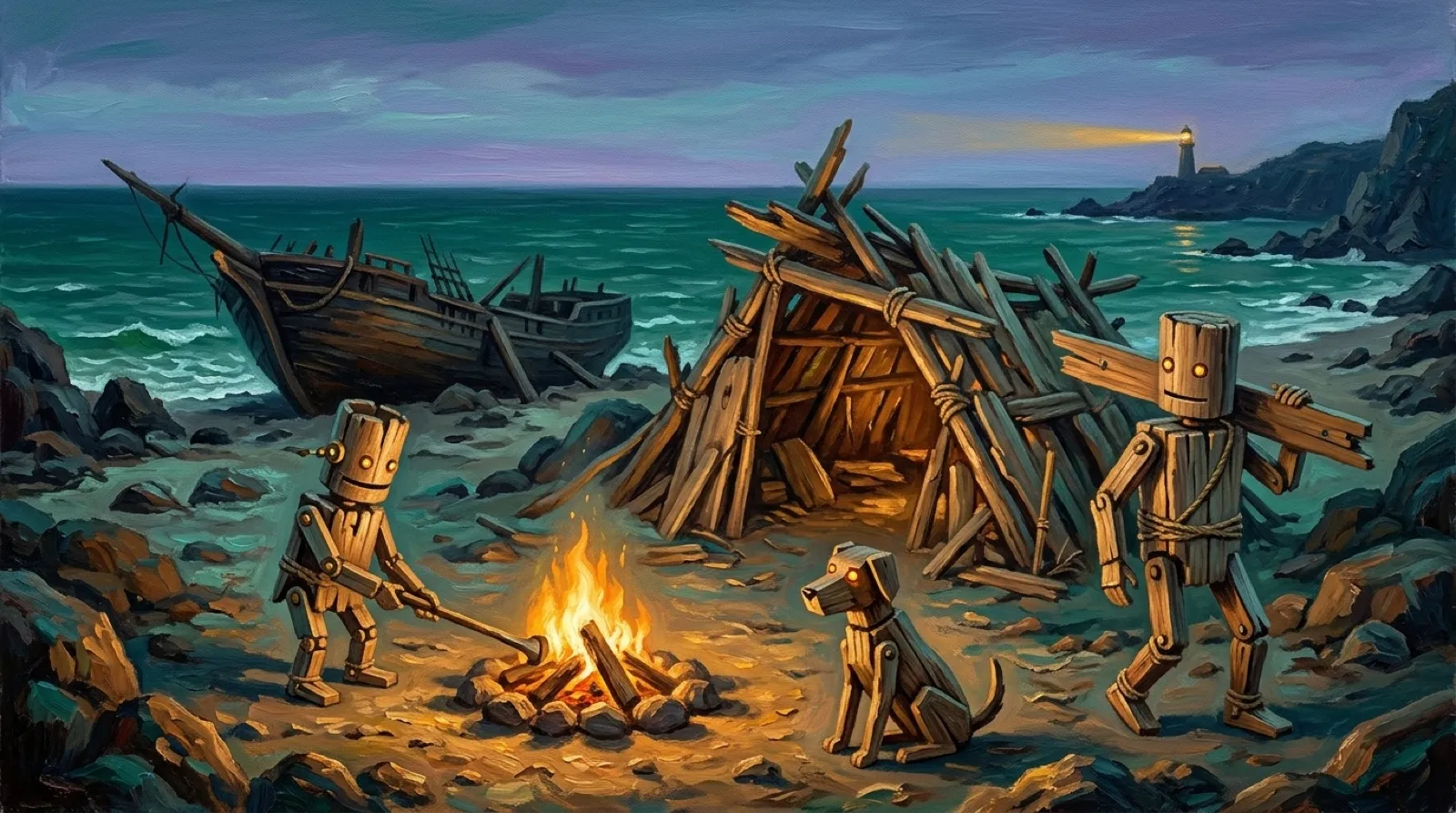
The opening of Landfall is a living picture book — fifteen painted chapters, narrated like a film, every frame moving. This is the house style of every Wayward Robots world.
Gullhaven, 1929 — a boy nobody keptHe built a way out of what they threw awayThe crossing — the emptiest part of the mapHis first friend — and lit its eyesEvery island is somebody's whole heartThe keeper, in his own image
What you are actually buying
A story that goes somewhere, carrying tools that work.
These are not worksheets with a cartoon on the cover. Each world is a book with an ending, and the clinical work is the plot — every exercise a client completes is one a character completed first, alone and scared.
“No wellness app has an ending. This is the first one you’ll finish.”the thesis, and the reason the tools land
“He didn’t pray. He counted.”
In through the nose for four, hold for four, out for six — invented in a storm in 1929 by a child with nothing else, and still the first thing the app teaches you.